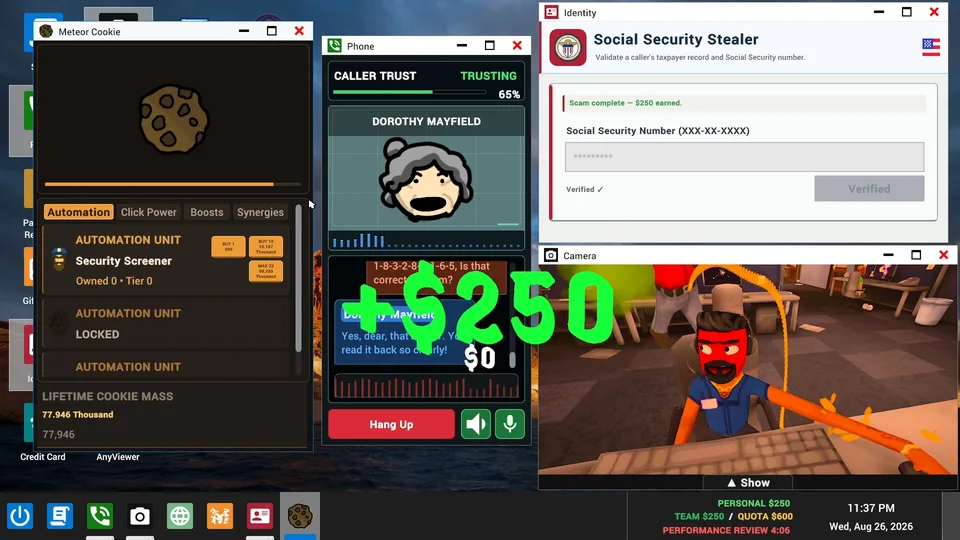
Why scam with your friends voice cloning wav files matter
Discover why scam with your friends voice cloning wav files are changing digital security. Get the latest insights on AI audio threats today.
Published: Scam With Your Friends Wiki Editorial Team
Table of Contents
Understanding Modern AI Audio Threats
Navigating the landscape of digital communication requires understanding how bad actors manipulate audio formats. When individuals discuss scam with your friends voice cloning wav files, they are usually addressing the alarming ease with which synthetic audio mimics real human speech. This technological shift makes everyday online interactions vulnerable to sophisticated deception.
The primary reason this issue demands immediate attention is the speed at which AI models replicate vocal characteristics. By analyzing short audio samples, cybercriminals generate convincing audio clips that bypass traditional skepticism. Recognizing these risks is essential for maintaining personal and community security in shared digital spaces.
Threat Factor
Traditional Risk
AI-Powered Risk
Detection Speed
Slow / Obvious
Near-Instantaneous
Resource Need
High (Studio Quality)
Low (Short Audio Clip)
Target Scale
Individualized
Automated / Mass
The Mechanics Behind Audio Replication
Audio synthesis relies heavily on capturing specific vocal frequencies and tonal patterns from digital recordings. When evaluating scam with your friends voice cloning wav files, security experts look at how uncompressed audio formats preserve the minute details necessary for high-fidelity cloning. Lossless formats provide the raw data that malicious software exploits to create uncanny digital replicas.
Community reports indicate that casual voice chats and shared media files often serve as unintentional sources of training data. According to player experience feedback shared across security forums, bad actors harvest public audio to train custom speech models. Understanding this workflow helps users protect their personal audio footprint.
Tip
Always verify the identity of callers or collaborators through secondary communication channels if unusual requests occur during online sessions.
Identifying Synthetic Audio in Real-Time
Spotting artificial speech requires a keen ear for subtle artifacts left behind by neural networks. When investigating scam with your friends voice cloning wav files, listeners should pay close attention to unnatural pauses, robotic inflection, and background noise anomalies. Real human speech contains micro-expressions that current algorithms struggle to replicate perfectly.
Audio Artifact
Description
Potential Cause
Breathing Gaps
Unnatural or missing breaths
Synthetic generation
Tonal Flatness
Lack of emotional variance
Text-to-speech mapping
Clipping Issues
Distortion in waveform peaks
Poor sample blending
Listen for repetitive breathing patterns or abrupt cutoffs in the audio stream.
Ask specific, context-dependent questions that require personal shared memory.
Disconnect and switch to a secure text channel if verification fails.
Protective Measures for Digital Communities
Safeguarding your group against vocal impersonation involves establishing strict communication protocols. Managing how you handle scam with your friends voice cloning wav files means limiting the public availability of your raw audio recordings. Simple habits drastically reduce the likelihood of unauthorized vocal duplication.
Restrict audio sharing permissions in public servers and group chats.
Use encrypted messaging applications for sensitive discussions.
Educate peer groups about emerging AI impersonation techniques.
Evaluating Platform Security and Developer Tools
Developers and platform creators are continually updating their security frameworks to combat unauthorized audio capture. Examining how tools handle scam with your friends voice cloning wav files reveals a constant arms race between exploit developers and security patches. Staying informed about platform updates provided by creators like JakeHub ensures users remain aware of implemented protections.
Protection Level
Feature Type
Implementation Status
Basic
Permission Toggles
Active
Intermediate
Audio Watermarking
Rolling Out
Advanced
Behavioral Biometrics
In Development
Warning
Never assume that an audio clip is authentic simply because it originates from a familiar platform or contact list.
Frequently Asked Questions
What are scam with your friends voice cloning wav files?
They refer to digital audio samples utilized or generated by malicious actors employing artificial intelligence to mimic specific individuals during online interactions.
How can I protect my voice from being cloned?
Limit the public sharing of clean, uncompressed audio recordings, restrict microphone permissions in untrusted applications, and utilize secure communication channels.
Do these audio threats affect standard gaming sessions?
Yes, multiplayer communication platforms are increasingly targeted by bad actors using scam with your friends voice cloning wav files to deceive players and disrupt community trust.